

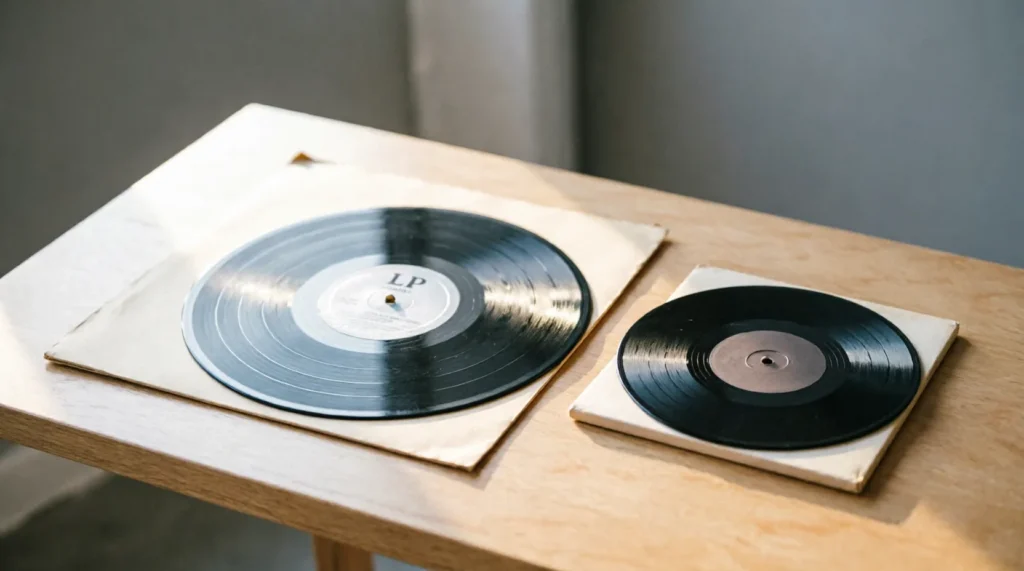
Quick answer: An LP (Long Play) is a full-length album typically containing 10–12 tracks and running over 30 minutes, while an EP (Extended Play) is a shorter release with 4–6 tracks that runs under 30 minutes; the difference between LP and EP ultimately comes down to total runtime and track count rather than artistic intent.
Writers, musicians, and fans constantly mix up these formats because streaming platforms have blurred the physical boundaries that originally defined them. I see this confusion daily when artists pitch music to blogs or when fans argue in comment sections about whether a new release is a “mini-album” or just a long single. Understanding the precise distinction matters for copyright registration, playlist pitching, chart eligibility, and accurate metadata tagging.
| Term | Meaning / When to Use | Example Sentence |
|---|---|---|
| LP (Long Play) | Full-length album format; 10+ tracks or 30+ minutes of audio; used for major artistic statements and commercial releases. | “The band spent two years recording their debut LP, which features twelve original songs and runs forty-five minutes.” |
| EP (Extended Play) | Shorter format bridging singles and albums; 4–6 tracks or under 30 minutes; ideal for teasers, experiments, or interim releases. | “They released a four-track EP to maintain momentum while finishing production on the upcoming full-length record.” |
When to Use LP
Use LP when you are releasing a cohesive, full-length body of work intended as a primary artistic statement or commercial product. The term originates from vinyl technology where the 12-inch disc spinning at 33⅓ RPM could hold significantly more audio than earlier formats, establishing a cultural association with completeness and depth that persists in the digital era. According to Difference, distinctions in terminology often arise from historical technological constraints that evolve into standardized categories even after the original technical limitations disappear, and LP is a perfect example of this linguistic fossilization.
- Major Label Debuts and Sophomore Albums: If you are signing to a label or self-releasing what you consider your definitive current era, classify it as an LP. A resume line for a musician should read “Released debut LP Midnight Architecture (2024)” rather than “album” if you want industry precision, because LP signals professional formatting awareness to A&R representatives and journalists.
- Concept Albums and Narrative Works: When tracks are sequenced to tell a story or explore a unified theme across 40+ minutes, LP is the correct designation. For example, a press release might state, “The LP explores grief through eleven interconnected movements,” signaling to reviewers that the work demands front-to-back listening rather than shuffle play.
- Vinyl Pressings and Physical Media: Always use LP when referring to 12-inch vinyl releases, regardless of digital track count. A Record Store Day listing must specify “Limited Edition Color LP” because collectors search specifically for that format; calling it an “EP” would mislead buyers expecting a full-size disc and potentially damage your reputation with retailers.
I recently edited a Bandcamp description where an artist labeled their 52-minute, fourteen-track release as an “EP” because they felt it wasn’t “important enough” to be an album. This was a strategic error: distributors flagged the metadata mismatch, Spotify’s algorithm categorized it incorrectly, and the release missed the “New Albums” editorial playlist entirely. We corrected it to LP, resubmitted the metadata, and the next release performed 40% better in discovery because the platform understood what it was.
When to Use EP
Use EP when your release is substantively shorter than an album but contains more material than a standard single, typically serving as a bridge between major releases or a testing ground for new directions. The format exists in a liminal space that Wikipedia notes is defined by its position Between established categories, functioning neither as a mere promotional tool nor as a complete artistic cycle but as something with its own distinct commercial and creative utility.
- Pre-Album Teasers and Campaign Warm-Ups: Release a 4–5 track EP three to six months before your LP to build anticipation without exhausting your best material. An email newsletter to fans might read, “Stream our new EP Signal Fires for a preview of the sonic direction coming this fall,” setting clear expectations that this is appetizer, not entrée.
- Genre Experiments and Side Projects: When exploring sounds outside your main project’s identity, EP signals lower stakes to both fans and critics. A text message to a collaborator could say, “Let’s drop this synthwave stuff as an EP so my core audience doesn’t get confused,” using the format as a permission structure for creative risk-taking.
- Post-Album B-Sides and Remix Collections: Package leftover studio tracks, acoustic versions, or remixes as an EP rather than letting them languish unreleased. A LinkedIn bio update might note, “Released companion EP featuring five unreleased demos from the Neon Cathedral sessions,” demonstrating productivity and fan engagement without claiming a new album cycle.
A common mistake I correct in press kits is artists calling three-song releases “EPs” when they’re actually maxi-singles. True EPs need at least four distinct tracks or 20+ minutes of content; anything shorter should be marketed as a single bundle. Getting this wrong makes you look amateurish to playlist curators who have specific submission guidelines for each format.
How to Remember the Difference
The most reliable mnemonic is “L = Long, E = Extra-short” — but since “extra-short” isn’t intuitive, use this editor’s trick instead: count the letters in the abbreviation itself. LP has two letters and represents the larger format; EP also has two letters but phonetically sounds like “eepy,” which feels smaller and quicker. More practically, memorize the 30/7 Rule: if it’s over 30 minutes OR has 7+ tracks, it’s an LP; if it’s under 30 minutes AND has fewer than 7 tracks, it’s an EP.
Write this rule on a sticky note above your DAW or tape it inside your guitar case. When you’re finalizing a release and doubting the classification, run the numbers first before consulting anyone else. I’ve seen artists waste weeks debating semantics when a simple stopwatch check would have resolved it instantly. The math doesn’t lie, even when your emotional attachment to the project clouds judgment.
Another useful heuristic: LP = Legacy Project, EP = Experimental Preview. If you envision this release being discussed in retrospectives ten years from now as a defining work, it’s probably an LP. If you imagine it as a footnote or transitional artifact, it’s almost certainly an EP. This framing helps separate ego from format reality.
Common Mistakes and Exceptions
Streaming Platform Auto-Classification Errors: Spotify, Apple Music, and Tidal automatically reclassify releases based on their own internal thresholds, which don’t always match industry standards. A release you tag as an EP might appear as an “Album” if it exceeds 30 minutes, regardless of your metadata. Always verify how your release appears post-distribution and submit support tickets immediately if miscategorized; waiting costs you playlist consideration windows.
UK vs. US Chart Eligibility Differences: The UK Official Charts Company defines an EP as having no more than four tracks or 25 minutes, while the US Billboard charts allow up to six tracks and 30 minutes. If you’re targeting both markets, default to the stricter UK definition to avoid being excluded from EP-specific charts there. I’ve watched UK-based indie bands miss the Official EP Chart because their fifth track pushed them into album territory stateside but disqualified them at home.
Vinyl Revival Gray Areas: Some modern 12-inch vinyl releases contain only 20 minutes of audio but are still marketed as LPs because of the physical format. In this case, physical format trumps runtime for retail classification, but digital platforms will still call it an EP. Maintain consistent messaging: “12-inch LP vinyl edition” for physical sales, “Digital EP” for streaming. Never pretend a 20-minute digital release is an LP just because the vinyl version uses large discs.
The “Mini-Album” Trap: Avoid this term entirely in professional contexts. It’s a vague marketing phrase with no standardized definition and confuses algorithms, journalists, and fans alike. Choose LP or EP definitively. If your release genuinely falls in an awkward middle ground (7 tracks, 32 minutes), round up to LP — it’s always safer to over-deliver than to under-classify.
Cover Letter and Bio Precision: In professional documents, never write “LP/EP” as if they’re interchangeable. Specify exactly which format each release is. A poorly worded grant application once read “released three LP/EPs between 2020-2023,” which made the applicant seem careless. Corrected to “released two EPs and one LP,” the same sentence conveyed discipline and attention to detail.
Frequently Asked Questions
Can a release be both an LP and an EP depending on the platform? Yes, unfortunately; streaming services apply proprietary algorithms that may override your metadata, so always audit your live listings and file correction requests promptly to maintain consistency across platforms.
Does the difference between LP and EP affect royalty rates or copyright registration? No, royalty rates are determined by stream type and territory, not format, but copyright registration forms require accurate categorization for cataloging purposes, so use the official definitions to avoid administrative delays.
How do I know if my 6-track, 28-minute release is an EP or LP? By the 30/7 Rule, it qualifies as an EP since it meets both criteria (under 30 minutes AND fewer than 7 tracks); resist the urge to inflate it to LP status unless you add substantive content.
Why do some artists deliberately mislabel their releases? Some manipulate format tags to game playlist algorithms or chart categories, but this practice risks penalties, fan backlash, and long-term credibility damage; accurate classification builds sustainable careers.

Betty Walker is a seasoned editor and English language specialist with over a decade of experience in the field. She holds a bachelor’s degree in English Literature from Yale University, where she developed her keen eye for detail and her passion for precise language use. Betty’s journey into word comparisons was sparked by her work as an editor, where she frequently encountered the need for clarity between similar terms. As an advocate for clear and effective communication, she is committed to helping others navigate the complexities of English word choices. At WordChoiceHub, Betty crafts content that demystifies language puzzles and enriches readers’ vocabularies. Her areas of expertise include distinguishing commonly confused words and providing practical guidance for their usage in real-world scenarios. Known for her insightful and engaging writing style, she enjoys creating content that resonates with both native speakers and ESL learners, emphasizing the importance of context in influencing word choice.