

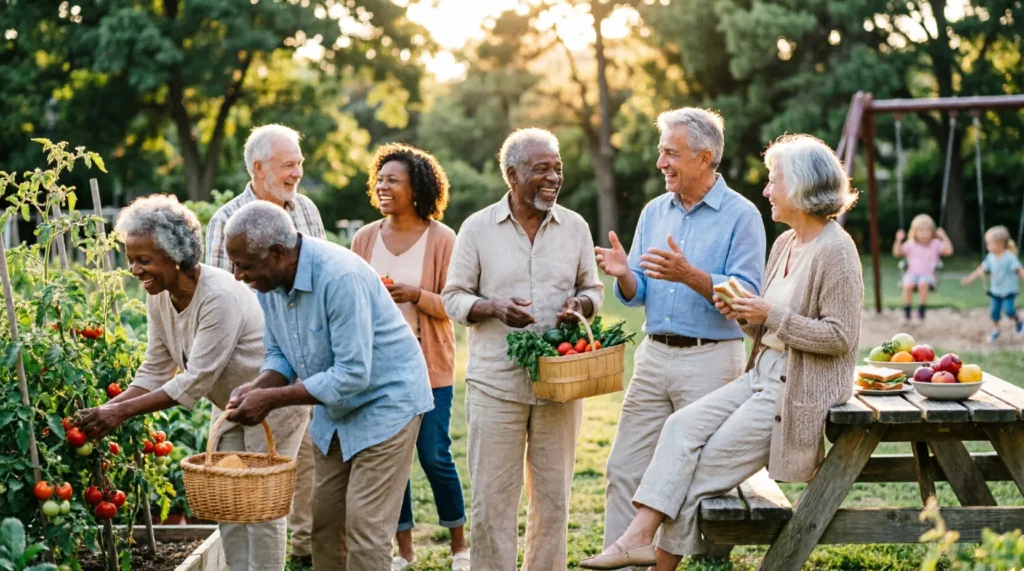
Quick answer: Active adults value community because it provides social connection, enhances physical and mental health, creates opportunities for lifelong learning, offers safety and security, enables shared interests and activities, provides emotional support during life transitions, and gives life greater purpose and meaning.
As people enter their 50s, 60s, and beyond, something remarkable happens: community becomes less of a nice-to-have and more of an essential pillar of healthy living. While independence remains important, active adults increasingly recognize that meaningful connections with others aren’t just pleasant—they’re crucial for thriving in later life.
This shift isn’t accidental. Research consistently shows that social engagement and community involvement directly impact everything from longevity to cognitive function. According to the National Institute on Aging, participating in activities you enjoy as you age can significantly improve your overall well-being and quality of life.
1. Social Connection Combats Isolation and Loneliness
Perhaps the most compelling reason active adults seek community is the simple human need for connection. As careers wind down, children move away, and social circles naturally shrink, intentional community-building becomes essential.
Loneliness isn’t just uncomfortable—it’s a serious health risk. Studies have shown that social isolation can be as damaging to health as smoking 15 cigarettes a day. Active adults understand this intuitively and take proactive steps to build and maintain relationships.
Community provides:
- Regular face-to-face interactions that digital communication can’t replace
- A sense of belonging and being valued
- Opportunities to both give and receive support
- Shared experiences that create lasting bonds
When you live in an active adult community or participate in local groups, you’re never just “hanging out.” You’re investing in your health and happiness. The morning coffee group, the weekly book club, the neighborhood walking partners—these aren’t casual activities. They’re lifelines.
2. Enhanced Physical Health Through Group Activities
Active adults know that exercise is easier—and more enjoyable—when it’s social. Community creates natural accountability and makes physical activity feel less like a chore and more like connection.
The Centers for Disease Control and Prevention emphasizes that physical activity benefits for adults 65 or older include improved cardiovascular health, stronger muscles and bones, and better balance. But here’s what the CDC also recognizes: people are more likely to stick with exercise when they do it with others.
Community-based physical activities popular among active adults include:
- Group fitness classes (yoga, water aerobics, dance)
- Walking clubs and hiking groups
- Sports leagues (pickleball, tennis, golf)
- Gardening clubs and community green spaces
- Dance groups and movement classes
The social element transforms exercise from a solitary obligation into anticipated social time. You’re not just working out; you’re catching up with friends while getting healthier. This dual benefit makes it infinitely more sustainable.
I’ve seen countless clients abandon their home gym memberships only to thrive in community fitness programs. The difference? Accountability to other people. When Margaret skips her morning walk, three friends text to check if she’s okay. That’s powerful motivation.
3. Mental Stimulation and Lifelong Learning
Communities provide endless opportunities to learn, grow, and keep the mind sharp. Active adults value intellectual engagement, and community settings offer structured and informal learning opportunities that solo pursuits can’t match.
Brain health doesn’t happen in isolation. According to research from the National Institute on Aging, engaging in mentally stimulating activities with others provides cognitive benefits that extend beyond the activity itself. The combination of social interaction and mental challenge creates a powerful synergy.
Community learning opportunities include:
- Book clubs that encourage critical thinking and discussion
- Educational lectures and speaker series
- Skill-sharing workshops (cooking, technology, crafts)
- Discussion groups on current events or philosophy
- Language learning circles
- History and culture exploration groups
The key difference between learning alone and learning in community? Accountability and perspective. When you commit to discussing a book with a group next month, you actually read it. When you hear ten different interpretations of the same chapter, your understanding deepens. For more, see Participating in Activities You Enjoy As You Age.
Take Robert, 68, who joined a technology workshop at his community center. He didn’t just learn to use his tablet—he formed friendships with peers who continue to troubleshoot together. The learning was the hook; the relationships are the retention tool.
4. Emotional Support During Life Transitions
Active adults face significant life transitions: retirement, empty nesting, health changes, loss of loved ones, and relocation. Community provides the emotional scaffolding to navigate these changes successfully.
Unlike family members who may live far away or have their own challenges, community members are often going through similar transitions simultaneously. This shared experience creates unique empathy and practical support.
Community support manifests as:
- Peer understanding from people facing similar challenges
- Practical help during illness or recovery
- Grief support from those who’ve experienced loss
- Celebration of milestones and achievements
- Encouragement during difficult periods
When Susan’s husband passed away, it was her community garden group that brought meals, checked in daily, and gently encouraged her back to social activities. Her adult children were supportive but lived three states away. Her community was there, present and engaged.
This isn’t to diminish the importance of family. Rather, it’s to recognize that community fills gaps that even the most loving families can’t always fill due to distance, work obligations, or generational differences.
5. Shared Interests and Passion Pursuits
After decades of focusing on career and family obligations, active adults finally have time to pursue genuine interests. Community amplifies these pursuits, turning solitary hobbies into shared passions.
The beauty of active adult communities is the concentration of people with discretionary time and diverse interests. You’re not just finding one person who loves birdwatching or vintage cars or watercolor painting—you’re finding a whole group.
Popular community interest groups include:
- Arts and crafts circles
- Music ensembles and choirs
- Outdoor adventure clubs
- Culinary groups and cooking classes
- Volunteer organizations
- Travel clubs and exploration groups
- Gaming groups (cards, board games, bridge)
When you pursue interests within a community, several things happen:
- Skill development accelerates through peer learning
- Resources are shared (equipment, knowledge, contacts)
- Motivation stays high through group enthusiasm
- Activities become more elaborate and ambitious
Consider the difference between painting alone at home versus joining a community art group. Alone, you might paint occasionally. In a group, you organize gallery shows, take field trips to museums, critique each other’s work, and push creative boundaries. The hobby becomes a passion; the passion becomes a defining part of your identity.
6. Safety, Security, and Peace of Mind
Active adults value independence, but they’re also practical about safety. Community provides layers of security that solo living can’t match, offering peace of mind to both residents and their families.
This isn’t about fear—it’s about smart planning. As we age, having people who notice if something’s off becomes increasingly valuable.
Community safety benefits include:
- Informal check-ins and welfare monitoring
- Quick emergency response from nearby neighbors
- Security measures in planned communities
- Transportation assistance when driving becomes challenging
- Home maintenance help and oversight
- Advocacy in medical or financial situations
The “wave hello” culture in active adult communities isn’t just friendly—it’s functional. When you wave to neighbors every morning, they notice when you don’t appear. This simple social contract provides a safety net that technology and even family can’t replicate. For more, see Community.
I worked with a client, James, 72, who had a minor stroke while living alone in his suburban home. He wasn’t found for two days. After his recovery, he moved to an active adult community. Six months later, when he had another health scare, his neighbor noticed his car hadn’t moved and called for a welfare check. James credits that community with saving his life.
7. Purpose and Meaning in Later Life
Perhaps most profoundly, active adults value community because it provides purpose. After careers end and child-rearing responsibilities fade, community involvement offers meaningful ways to contribute, lead, and matter.
Purpose isn’t just feel-good philosophy—it’s a health imperative. Research consistently shows that having a sense of purpose in life correlates with longevity, better health outcomes, and greater life satisfaction.
Community creates purpose through:
- Leadership opportunities in organizations and committees
- Mentoring younger community members
- Volunteer work that addresses real needs
- Skill-sharing that helps others
- Advocacy for community improvements
- Event planning that brings people together
When you’re part of a community, you’re needed. Your opinions matter. Your participation makes a difference. This sense of being valued and necessary is profoundly fulfilling.
Take Maria, 67, who retired after 40 years as a teacher. She thought she’d miss the classroom, but what she really missed was making a difference. In her active adult community, she now tutors children in reading, leads a literacy committee, and organizes book drives. “I’m still teaching,” she says. “Just in a different classroom.”
Making Community a Priority
Understanding why active adults value community is one thing; building meaningful connections is another. If you’re entering this life stage or supporting someone who is, consider these action steps:
Start before you need it. Don’t wait for a crisis or major life transition to build community. Invest in relationships while you’re healthy and active.
Pursue genuine interests. Join groups centered on activities you actually enjoy, not what you think you should do. Authenticity attracts authentic connections.
Show up consistently. Community isn’t built through occasional attendance. Regular participation builds trust and deepens relationships.
Be willing to both give and receive. Healthy community involves mutual support. Don’t just take; contribute your time, skills, and energy.
Embrace diversity. The richest communities include people with different backgrounds, perspectives, and experiences. Stay open to connections beyond your immediate comfort zone.
The Bottom Line
Active adults value community because it addresses fundamental human needs that become more pronounced, not less, as we age. Social connection, physical health, mental stimulation, emotional support, shared interests, safety, and purpose—these aren’t luxuries. They’re essentials for thriving in later life.
The research is clear, the benefits are real, and the need is universal. Community isn’t about losing independence; it’s about enhancing it. It’s not about dependency; it’s about interdependence—the recognition that we all do better when we’re connected to others.
As you move through your active adult years, or support someone who is, remember: community isn’t something you find. It’s something you build, nurture, and invest in. The returns—measured in health, happiness, and longevity—are worth every effort.

Brandon Martinez is a passionate linguist with a deep love for the dynamics of the English language. He earned his Ph.D. in Applied Linguistics from Stanford University, where he focused his research on cognitive linguistics and language processing. With a career spanning over 12 years, Brandon has dedicated himself to understanding how people choose and use words in specific contexts. His connection to word comparisons was forged through years of teaching English as a second language and witnessing firsthand the challenges non-native speakers face with verbage. At WordChoiceHub, Brandon produces content that delves into the psychological factors affecting word choice, offering readers valuable strategies to enhance their linguistic precision. He specializes in exploring idiomatic expressions, phrasal verbs, and the cultural nuances that influence English word usage. His articles are well-researched and offer unique perspectives that appeal to both academic audiences and those looking to improve their everyday communication skills. Brandon is committed to making the art of word selection not only informative but also an enjoyable experience for all.