

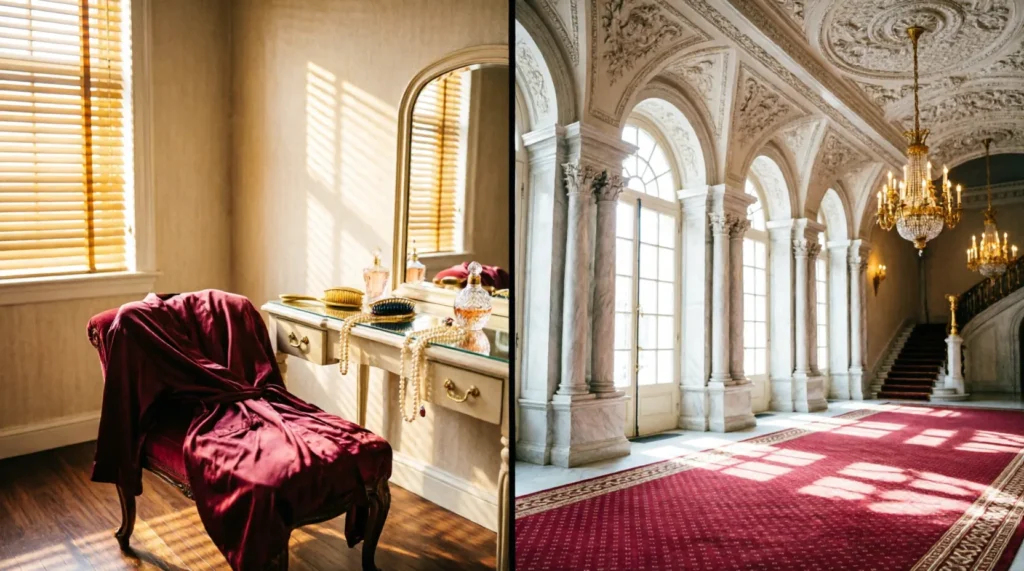
Quick answer: Neither word is universally “better”; they serve entirely different descriptive purposes. Use glamour when describing an alluring, sophisticated, or fashionable attractiveness, such as a red-carpet event or a luxury brand. Use splendor when describing magnificent, grand, or impressive beauty on a large scale, such as a mountain range, a palace, or a royal ceremony. Choosing the right word depends entirely on whether you want to evoke stylish, curated allure or majestic, awe-inspiring grandeur.
Writers frequently confuse glamour and splendor because both describe a high degree of beauty and visual appeal. However, substituting one for the other fundamentally changes the tone and imagery of your sentence. As a veteran copy editor, I see this mix-up constantly in travel brochures, wedding invitations, and luxury brand copy, where the wrong word dilutes the intended emotional impact. Understanding the distinct nuances of each term will immediately sharpen your descriptive writing and ensure your message lands exactly as intended.
| Term | Meaning / When to use | Example sentence |
|---|---|---|
| Glamour | An attractive, exciting, and often illusory quality associated with charm, fashion, wealth, and sophistication. Use for people, events, lifestyles, or curated aesthetics. | The vintage Hollywood actress exuded an effortless glamour that captivated the entire audience. |
| Splendor | Magnificent, grand, or impressive beauty, typically on a large, imposing, or majestic scale. Use for natural landscapes, monumental architecture, or grand ceremonies. | The wedding guests marveled at the architectural splendor of the centuries-old cathedral. |
When to use glamour
Glamour refers to a captivating, stylish, and often mysterious attractiveness. It is deeply tied to human presentation, fashion, wealth, and the polished allure of a specific lifestyle. According to Wikipedia’s article on Glamour, the term originally denoted a magical spell or illusion cast over someone to make them appear more attractive. This historical root perfectly explains why modern glamour often involves a curated, polished, and sometimes artificial presentation designed to dazzle the observer.
You should reach for “glamour” when your subject is human-centric, intimate, or tied to the world of style and sophistication. It is the ideal word for describing fashion shows, high-end cosmetics, celebrity culture, or an elegantly decorated boutique hotel lobby. Glamour implies a deliberate effort to create an exciting, attractive atmosphere that draws people in through charm rather than sheer physical scale.
Consider these concrete, real-world editing scenarios where choosing “glamour” is the only correct path:
- Marketing email context:
Incorrect: “Join us for an evening of old-world splendor at the Grand Hotel’s rooftop bar.”
Correct: “Join us for an evening of old-world glamour at the Grand Hotel’s rooftop bar.”
Why: A rooftop bar event is about stylish social interaction, cocktails, and fashion. “Splendor” would awkwardly imply the bar is a massive, awe-inspiring monument like a cathedral, which distracts from the intimate, chic vibe you are trying to sell. - Resume or portfolio context:
Incorrect: “Managed public relations for a luxury cosmetics brand, enhancing its modern splendor and market appeal.”
Correct: “Managed public relations for a luxury cosmetics brand, enhancing its modern glamour and market appeal.”
Why: Brands and products possess glamour (stylish appeal), not splendor (majestic grandeur). Using “splendor” here sounds unnatural and overly dramatic for a corporate achievement. - Casual text message context:
Correct: “The party had absolutely zero glamour, just a bunch of people in sweatpants eating takeout.”
Why: This correctly uses the word to highlight the absence of stylish, curated presentation in a social setting.
When to use splendor
Splendor describes magnificent, grand, and awe-inspiring beauty, typically on a large, imposing, or majestic scale. It is the definitive go-to word for natural landscapes, monumental architecture, royal ceremonies, or anything that commands respect and awe through its sheer size, richness, or brilliance. As noted in the Wikipedia entry for Splendor, the word is frequently associated with brilliant, dazzling, or magnificent visual displays, reinforcing its use for grand, large-scale beauty rather than intimate, stylish allure.
You should reach for “splendor” when your subject is vast, historic, or naturally overwhelming. It is the ideal word for describing a sunset over the Grand Canyon, the gilded ceilings of a European palace, a lavish royal wedding procession, or a thriving, vibrant garden in full bloom. Splendor implies an objective, often breathtaking magnificence that exists independently of human fashion or trends.
Consider these concrete, real-world editing scenarios where choosing “splendor” is the only correct path:
- Travel blog or brochure context:
Incorrect: “Hikers were rewarded at the summit with the breathtaking glamour of the alpine valley at sunrise.”
Correct: “Hikers were rewarded at the summit with the breathtaking splendor of the alpine valley at sunrise.”
Why: Nature does not wear makeup, curate a lifestyle, or attempt to be fashionable. Describing a mountain valley as having “glamour” personifies it in a jarring, unnatural way. “Splendor” correctly captures the majestic, awe-inspiring scale of the natural world. - Real estate listing context:
Incorrect: “This historic estate offers a rare glimpse into the architectural glamour of the Gilded Age.”
Correct: “This historic estate offers a rare glimpse into the architectural splendor of the Gilded Age.”
Why: While a house can be glamorous, “architectural splendor” is a standard, powerful collocation that emphasizes the grand scale, intricate detail, and historical magnificence of the building’s design, which is exactly what high-end real estate copy aims to highlight. - Wedding toast context:
Correct: “We celebrate your union today in the full splendor of this historic botanical garden.”
Why: This elevates the venue, acknowledging its majestic, vibrant, and grand natural beauty as a fitting backdrop for a significant life event.
How to remember the difference
If you constantly second-guess which word to use, rely on this simple, two-part mnemonic device.
First, think of the G in Glamour as standing for Gloss or Gowns. Glamour is fundamentally about personal polish, high fashion, and the shiny, curated surface of human-made style. It is intimate, social, and designed to attract.
Second, think of the S in Splendor as standing for Size or Summit. Splendor is about massive, awe-inspiring, majestic beauty that makes you feel small in comparison, like a towering mountain range, a vast ocean, or a towering palace.
Editor-level insight: When I am editing luxury copy or descriptive manuscripts, I apply what I call the “Scale Test.” Ask yourself: Can the subject fit inside a jewelry box or a wardrobe? If you are describing a dress, a perfume bottle, a cocktail party, or a person’s demeanor, it needs glamour. If the subject requires you to physically tilt your head back to see the top of it, or if it spans a horizon, it demands splendor. This quick mental check eliminates 99% of usage errors instantly.
Additionally, understanding the etymological roots seals the difference. “Glamour” derives from the Scots word “gramarye,” meaning magic or enchantment, specifically an illusion cast on the eyes. “Splendor” derives from the Latin “splendere,” meaning to shine or be bright. One is a magical, stylish illusion; the other is a brilliant, objective radiance.
Common mistakes and exceptions
Even experienced writers stumble into a few specific traps when deploying these words. Being aware of these edge cases will keep your writing polished and professional.
1. Regional spelling variations
Spelling consistency is critical. In US English, “glamor” (without the ‘u’) is an accepted variant, though “glamour” remains the dominant, more elegant, and widely preferred spelling in formal publishing and luxury marketing. In UK, Canadian, and Australian English, “glamour” is the only correct spelling. Similarly, “splendor” is the standard US spelling, while “splendour” is the required UK spelling. Always match your spelling to your target audience’s regional standard, and never mix them in the same document.
2. The overlapping context trap
Can a palace have glamour? Yes, but the meaning shifts dramatically based on your word choice. If you write, “The palace’s splendor overwhelmed the visitors,” you are highlighting its massive, golden, awe-inspiring architecture and physical grandeur. If you write, “The palace’s glamour attracted the socialites,” you are highlighting the fashionable, exciting, and perhaps scandalous lifestyle of the people who lived and partied there. Choose the word that matches the specific facet of the subject you want to highlight.
3. The “False Glamour” connotation
Because glamour historically implies an illusion or a magical spell, it can occasionally carry a slightly negative or superficial connotation in critical or journalistic writing. For example, a journalist might write about “the false glamour of the gambling industry” to imply that the shiny surface hides a dark reality. Splendor rarely carries this negative weight; it is almost universally positive, objective, and rooted in genuine, observable magnificence.
4. Adjective form confusion
Writers often confuse the adjectives “glamorous” and “resplendent.” A person can look “resplendent” in a tailored suit, meaning they are shining and magnificent. However, describing a person as having “splendor” as a noun sounds archaic and overly grand. Stick to “glamour” or “elegance” for people, and reserve “splendor” for the environments, events, or objects surrounding them.
Frequently Asked Questions
Is “glamor” or “glamour” the correct spelling?
Both are technically correct, but “glamour” is the original, more widely accepted spelling globally, especially in formal, literary, and luxury writing. “Glamor” is primarily a simplified US variant.
Can a person have splendor?
It is highly unusual and sounds archaic. While you might poetically say a bride looked “resplendent” in her gown, describing a person as possessing “splendor” is overly grand. Use “glamour,” “elegance,” or “radiance” for people.
Which word is better for a wedding invitation?
Use “glamour” if you are emphasizing a stylish, fashionable, black-tie, or vintage Hollywood cocktail vibe. Use “splendor” if you are emphasizing the majestic, grand, or historic natural beauty of the venue itself.
Are glamour and splendor synonyms?
No. While both relate to beauty and visual appeal, they are not interchangeable. Glamour is curated, stylish, and human-centric. Splendor is majestic, grand, and often nature- or architecture-centric.

Betty Walker is a seasoned editor and English language specialist with over a decade of experience in the field. She holds a bachelor’s degree in English Literature from Yale University, where she developed her keen eye for detail and her passion for precise language use. Betty’s journey into word comparisons was sparked by her work as an editor, where she frequently encountered the need for clarity between similar terms. As an advocate for clear and effective communication, she is committed to helping others navigate the complexities of English word choices. At WordChoiceHub, Betty crafts content that demystifies language puzzles and enriches readers’ vocabularies. Her areas of expertise include distinguishing commonly confused words and providing practical guidance for their usage in real-world scenarios. Known for her insightful and engaging writing style, she enjoys creating content that resonates with both native speakers and ESL learners, emphasizing the importance of context in influencing word choice.